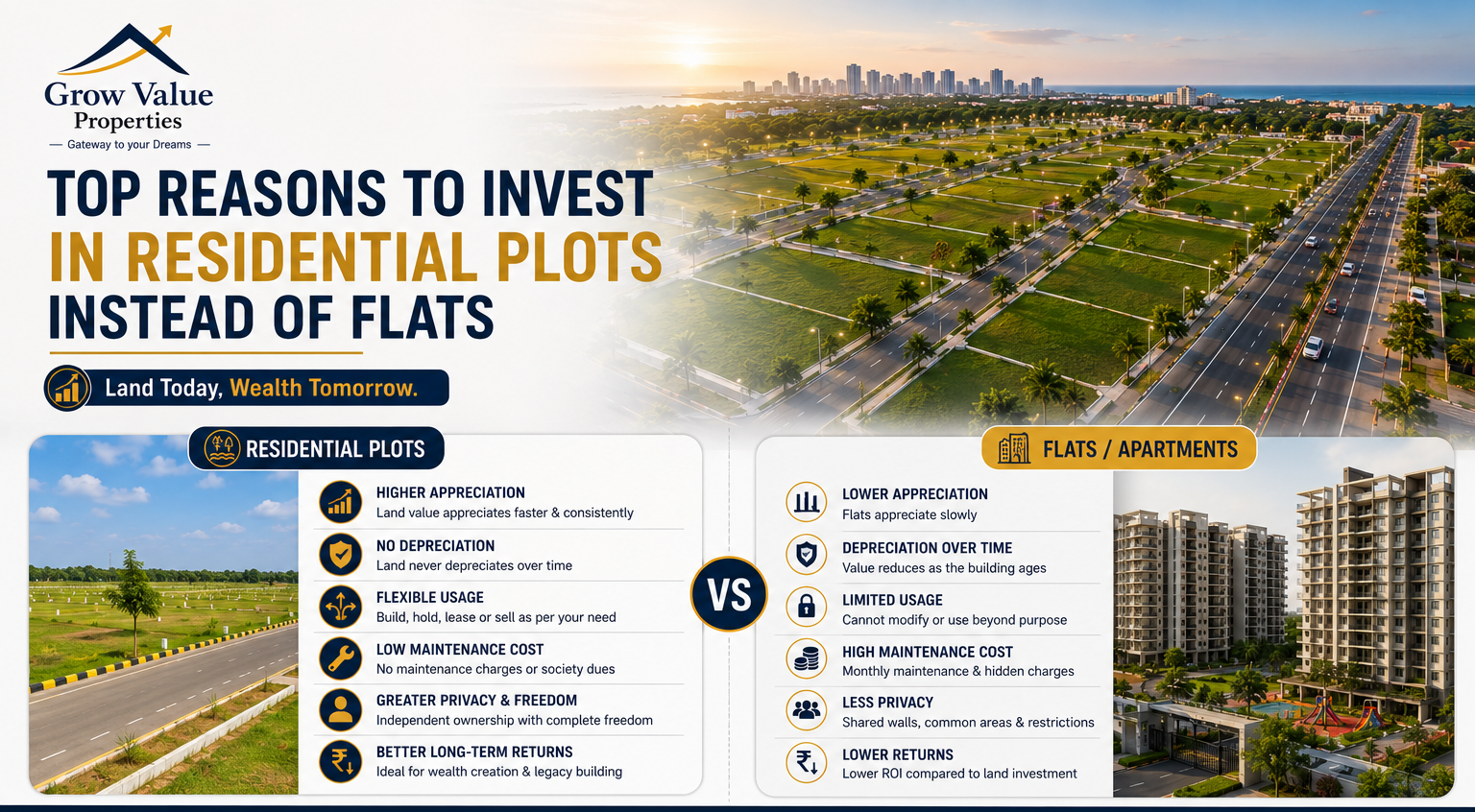
Should you buy a residential plot or a ready flat? The answer depends on how soon you need a home, how much flexibility you want, and how long you plan to stay invested. Here are the main reasons many buyers choose plots, along with situations where a flat may be the better choice.
1. Clear Land Ownership
When you buy a plot, you own a defined piece of land with its own boundaries. In a flat, you own the unit and an undivided share (UDS) of the land, which you hold together with other owners.
2. Freedom to Design Your Home
A plot lets you plan the layout, floors, and style around your family, subject to building rules and approvals. A flat's structure is largely fixed.
3. Build at Your Own Pace
You can hold the land now and construct when your finances or family plans are ready. You can also build in stages, adding a floor later if rules allow.
4. Lower Recurring Costs
Flats usually come with monthly maintenance for lifts, security, and shared areas. A vacant plot generally has lower upkeep, although gated layouts may have their own maintenance terms.
5. Land Does Not Age
Buildings wear out with time, while land does not. This is one reason buyers consider plots in growing areas for long-term holding, though value always depends on location and demand.
When a Flat May Suit You Better
- You need to move in immediately
- You want amenities such as a gym, lift, or clubhouse from day one
- You need to live close to the city centre
- You want rental income soon after buying
- You prefer not to manage construction
Plots vs Flats: A Quick Comparison
- Ownership: plot, defined land; flat, unit plus undivided share.
- Design: plot, flexible; flat, largely fixed.
- Move-in: plot, after construction; ready flat, immediate.
- Monthly costs: plot, usually lower; flat, regular maintenance.
- Rental income: vacant plot, usually none; flat, possible.
Checks Before Buying a Plot
- Layout approval: confirm the DTCP or CMDA approval number and match it against the approved layout plan.
- RERA registration: check the project and agent details on the TNRERA website where registration applies.
- Title documents: have a lawyer review the sale deed and the parent documents that trace past ownership.
- Encumbrance Certificate (EC): confirms whether the land carries a registered mortgage or other recorded transaction.
- Patta and FMB sketch: confirm the owner's name, survey number, and plot boundaries.
Bank terms for plot loans can differ from home loans, so speak with your lender early.
Exploring Plots on ECR
If a plot suits your plans, ECR offers options for different needs, including residential plots near Mahabalipuram and villa plots on ECR. See all our ECR plots to compare.
Conclusion
Choose a plot if you value land ownership, flexibility, and a long-term view. Choose a flat if you need a ready home and immediate convenience.
Frequently Asked Questions
Is it better to buy a plot or a flat?
A plot suits buyers who want land ownership and design freedom. A flat suits those who need a ready home and shared amenities.
Does a flat owner own the land?
A flat owner typically holds an undivided share of the land along with the other owners in the building.
Are maintenance costs lower for plots?
Usually yes, since a vacant plot has no building or lifts to maintain, though gated layouts may charge for shared upkeep.
Start Your Plot Investment Journey
Browse our premium residential plots on ECR Chennai — DTCP & RERA approved.